TECHNICAL REFERENCE
Materials & Specifications
A reference for comparing materials across every product we produce — use this alongside the product-level specs on the Nameplates & ID Tags page when planning a project.
RECENT WORK
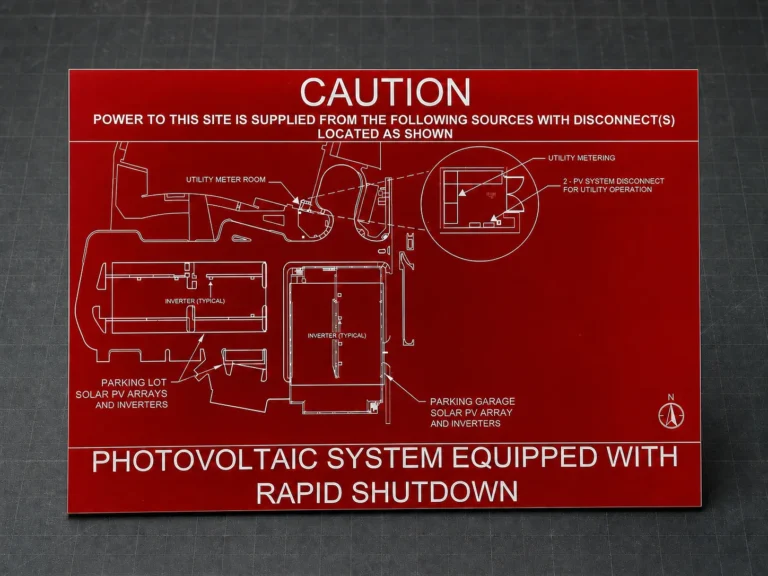
Solar Map Placard With Custom Engraving
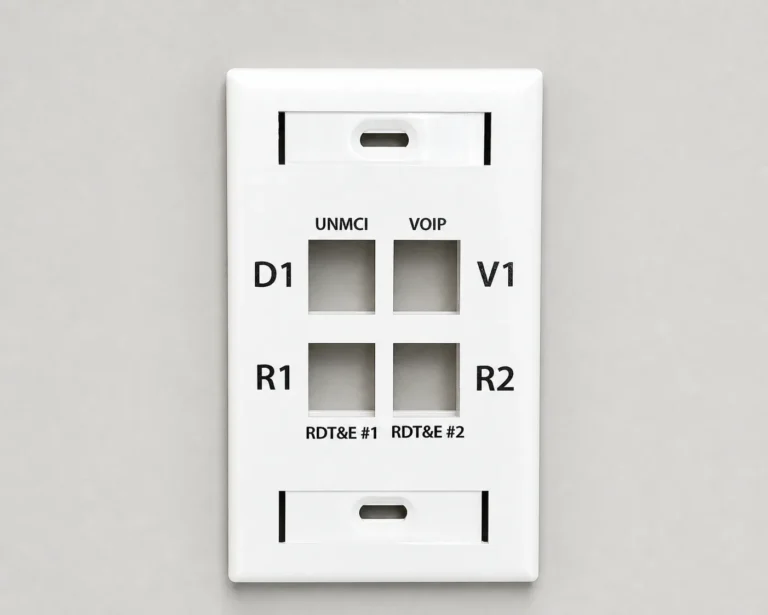
Telecom Wall Plate With Full Color Printing
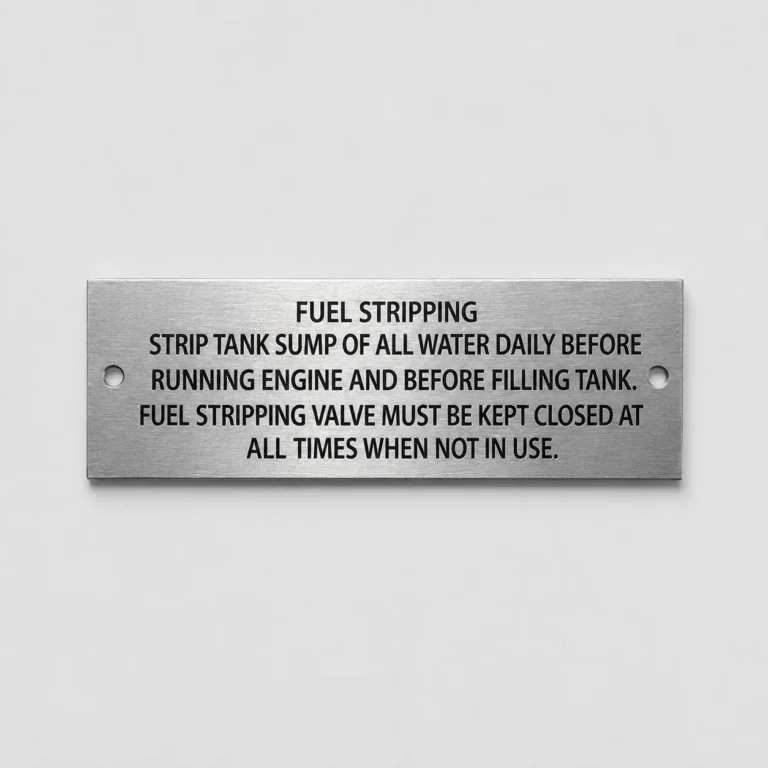
Brushed Aluminum Plate With Deep Fiber Engraving
MATERIAL COMPARISON
Choosing a material starts with the environment.
The right material depends less on appearance and more on what the piece will face once it’s installed — moisture, handling, sun exposure, and how long it needs to last. This table compares every material across our product range on the factors that actually matter for that decision.
| Material | Corrosion resistance | Typical engraving depth | Outdoor rated | Relative cost |
|---|---|---|---|---|
| Aluminum | Good (better anodized) | 0.003″–0.005″ | Yes | $ |
| Brass | Fair — patinas unless lacquered | 0.003″–0.005″ | Limited | $$ |
| Stainless Steel | Excellent | 0.002″–0.004″ (harder material, shallower cut) | Yes | $$$ |
| Phenolic | N/A — not metal | Full-depth through top layer (~0.005″–0.010″) | Indoor primarily | $ |
| Vinyl (printed/cut) | N/A — not engraved | No engraving — printed or cut graphics | Yes, with rated adhesive | $ |
| Engineering-grade reflective vinyl | N/A — not metal | No engraving — printed or cut graphics with durable lamination | Yes, with rated adhesive and protective laminate | $$ |
ENGRAVING DEPTH & TOLERANCE
Depth varies by material, not by design.
Metal engraving depth is governed by the hardness of the material — stainless steel, being harder, engraves shallower than aluminum or brass at the same tool setting. Phenolic works differently: engraving cuts through a thin colored top layer to expose the core color beneath, so “depth” there is really about layer thickness, not tool penetration. For tight-tolerance projects (matching an existing tag exactly, or fitting a specific mounting recess), send us the piece you’re replacing or its drawing — we’ll match it rather than estimate from a description.
COMPLIANCE STANDARDS
MIL-STD-130: what it covers.
MIL-STD-130 is a marking standard that specifies how identification information — part numbers, serial numbers, manufacturer codes — must be formatted and applied to an item. It originates from defense and government contracting, but the standard itself is simply a set of formatting rules, and we can produce tags and nameplates that follow it whenever a contractor’s own project requires it.
This is a production capability, not a government relationship on our part — if your project specifies MIL-STD-130 or a similar standard, note it on your RFQ and we’ll confirm we can meet the specific requirement before quoting.
Have exact specs already?
Skip ahead to the RFQ form and attach your drawing or spec sheet directly.