The fiber laser vs. CO2 laser question comes down to one thing: what is the piece actually made of? The answer decides which machine can mark it at all.
CO2 lasers: wood, acrylic, plastic, leather, and phenolic
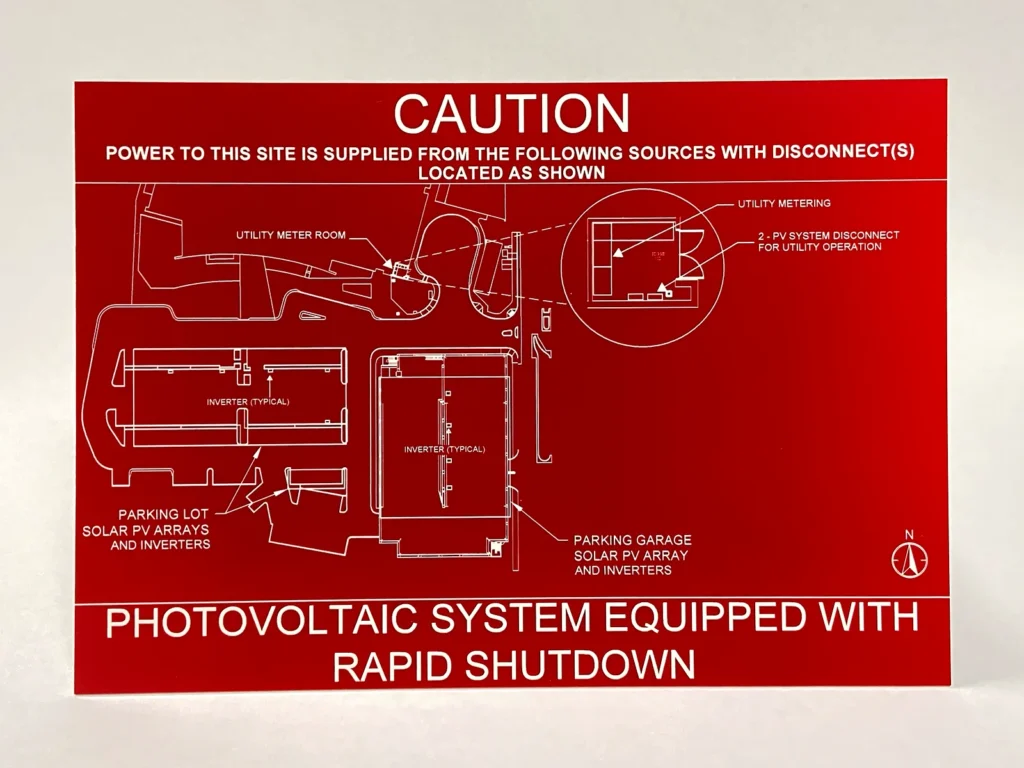
CO2 lasers are the standard tool for wood, acrylic, plastic, leather, and textiles. The longer wavelength is absorbed well by these organic and semi-organic materials. Our solar map placards, engraved into UV-stable plastic for solar installers, are CO2 work.
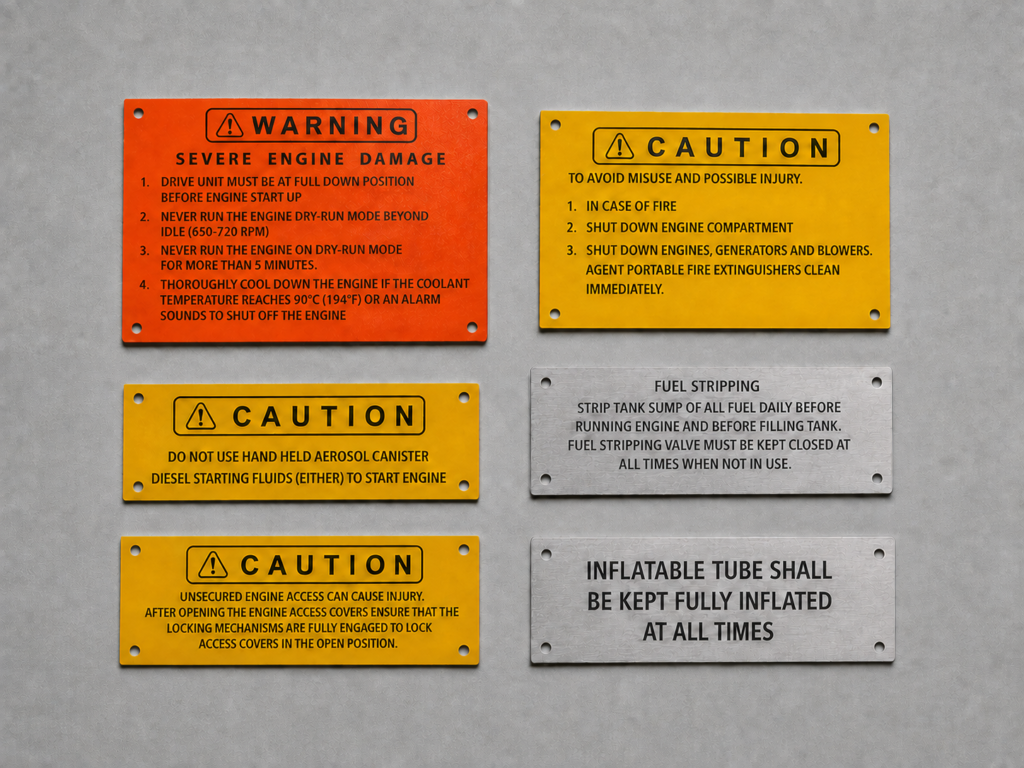
Phenolic tags fall into this group too. The engraving cuts through a thin colored top layer to expose the core color beneath. That works because phenolic behaves like a plastic under the beam, not like a metal. For a side-by-side look at how each material engraves, see our Materials & Specifications page.
Fiber lasers: bare metal
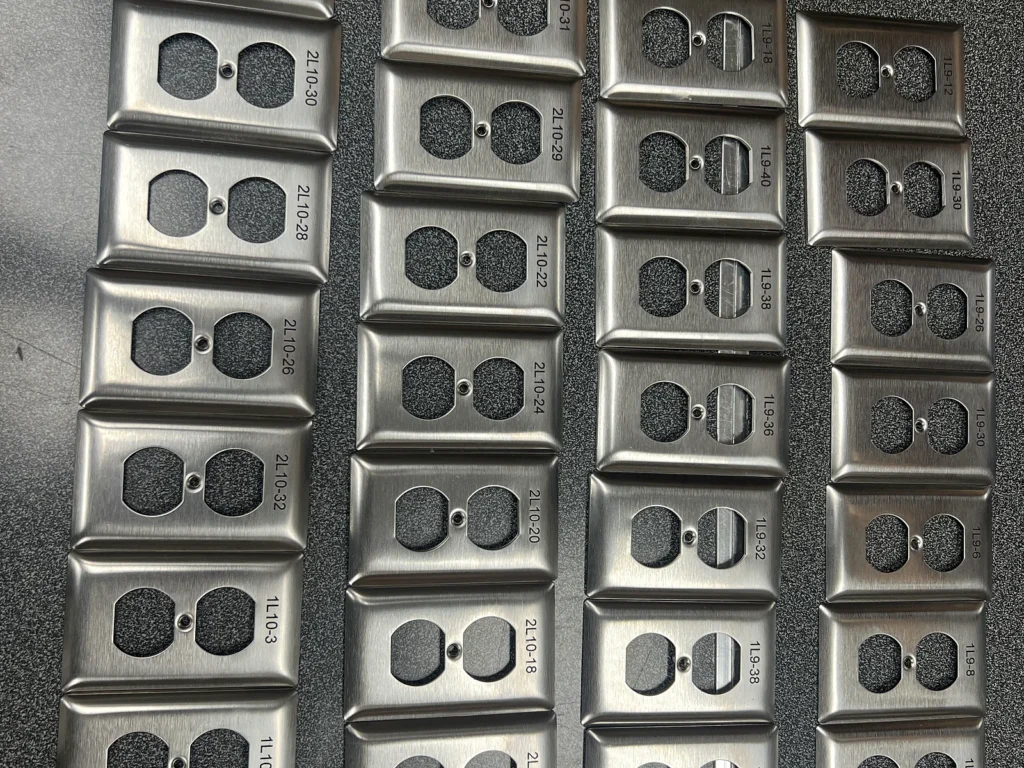
Fiber lasers exist for one main job: marking metal, especially uncoated metal that a CO2 laser cannot effectively touch. Stainless steel switch plates are the clearest example on our shop floor. Fiber is the practical way to get a clean, permanent mark into bare stainless.
What about coated or anodized metal?
This is where it gets less black-and-white. Anodized aluminum has a colored oxide layer on top of the bare metal. A CO2 laser can sometimes mark it by burning through that top layer to reveal the metal underneath, similar in principle to phenolic engraving. Bare, unanodized metal has no top layer to burn through, so it needs fiber. If you’re not sure which category your material falls into, send us a photo before we quote the job.
Why stainless engraves shallower than aluminum
Stainless is a harder material, so a fiber laser cuts a shallower mark into it than into softer aluminum: typically 0.002″ to 0.004″ on stainless versus 0.003″ to 0.005″ on aluminum. That is physics, not a quality shortfall. The mark is still permanent. It just sits closer to the surface because harder metal is harder to displace.
Where sandcarving fits in
For glass and stone, we reach for sandcarving instead of either laser. It uses controlled abrasive etching instead of a laser beam. It can also work on metal and wood when a project needs more physical depth and texture than a laser mark provides, which is why it shows up on some of our dimensional presentation pieces.
The short version
If it’s metal, particularly bare, uncoated metal like stainless, you’re almost certainly looking at fiber. If it’s wood, acrylic, leather, phenolic, or most plastics, CO2 is the right tool. If it’s glass, stone, or a piece that needs real dimensional depth, ask about sandcarving instead.
A few questions we get regularly
Can one laser do both jobs?
Not really, at least not well. Fiber lasers can technically mark some plastics, but the results are inconsistent compared to CO2. It is less a matter of preference than of using the right tool for the material in front of us.
Does the color of the material change anything?
For phenolic, yes. The whole point is a colored top layer over a different core color, so the color choice sets the contrast of the finished mark. For metal, color matters less than whether the surface is bare or coated.
Can you engrave something I bring in that I’m not sure about?
Usually, once we’ve looked at the material, coating, and shape. That review is part of how we plan any customer-supplied piece before it goes near a laser.
Not sure which one your project needs? Send us a photo and the material spec, and we’ll tell you plainly which process fits, not just which one happens to be free that day.