Most material questions come down to one thing: what will this piece actually face once it’s installed?
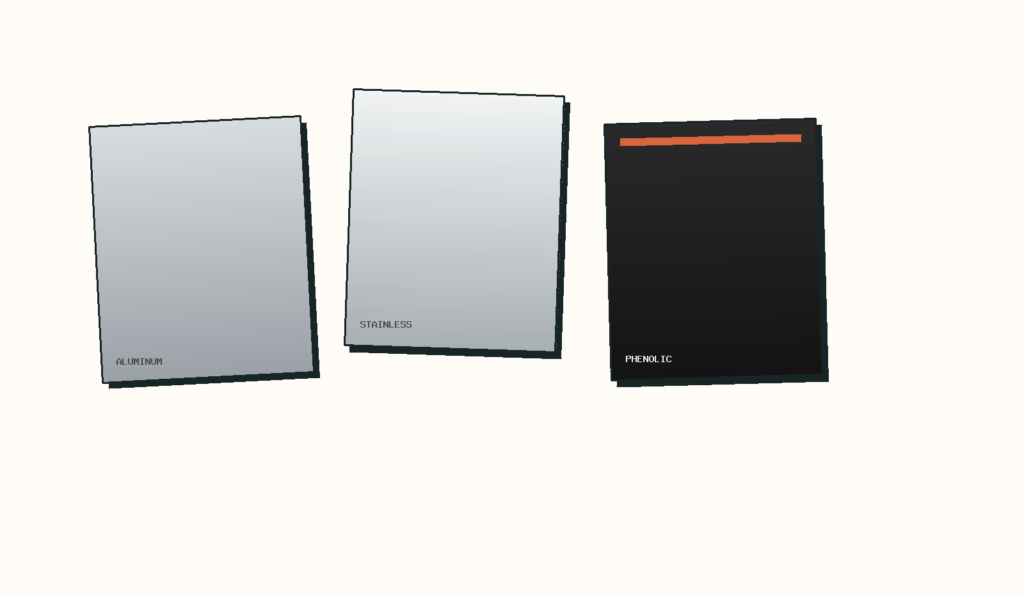
Phenolic is the standard for most panel and equipment tags — and for good reason. It’s the most economical option, and engraving cuts through a thin colored top layer to expose the core color beneath, giving permanent, high-contrast lettering that won’t fade or peel. The tradeoff: it’s rated for indoor use primarily. Sun, rain, and repeated moisture exposure will shorten its life.
Aluminum is the usual upgrade when a tag needs to live outdoors. It has good corrosion resistance — better when anodized — at the lowest cost tier of the three metals. It’s the right call for outdoor equipment tags, asset IDs, and general exterior identification where budget matters.
Stainless steel is the answer when the environment is genuinely harsh: washdown areas, coastal exposure, anywhere corrosion resistance can’t be a compromise. It has the best corrosion resistance of the group, and it engraves shallower than aluminum or brass simply because it’s a harder material — not a quality issue, just physics. It’s also the highest cost tier, which is the real tradeoff: you’re paying for durability you may not need if the tag isn’t facing real weather.
Brass sits in between — better resistance than aluminum, but it patinas over time unless lacquered, and it’s rated for limited outdoor use at best. It’s a good fit for premium-looking indoor equipment and control panel tags, not for anything left outside.
The short version: phenolic for indoor, aluminum for outdoor on a budget, stainless for outdoor where failure isn’t an option, brass for indoor pieces that need to look a step up.
Not sure which one your project needs? Send us the dimensions and where it’ll be mounted — we’ll tell you plainly which material actually fits, not just which one we’d rather sell.